
Document, Instruct, Share
Cloud Server and VPS: Where the Real Differences Lie? A Comprehensive Analysis
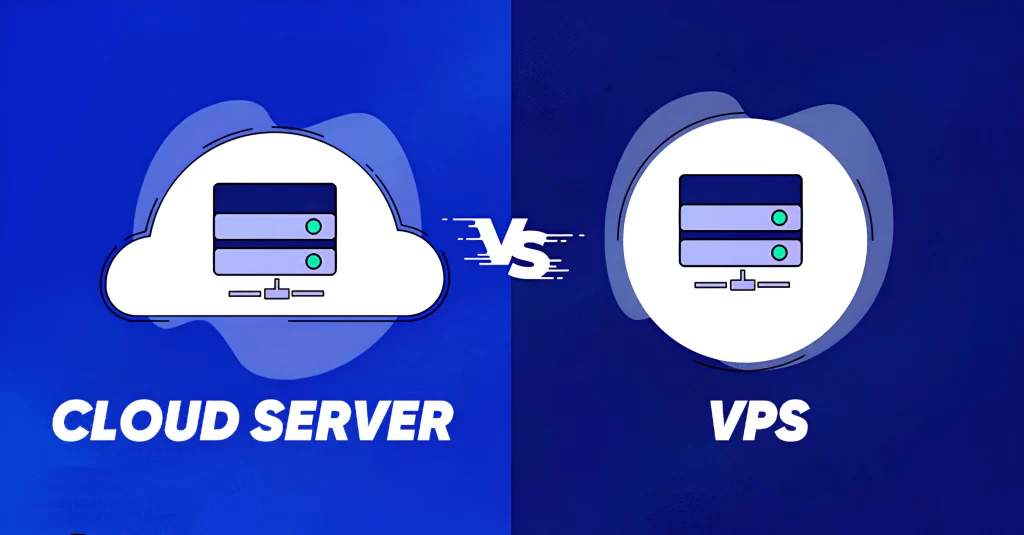
In the world of digital infrastructure, two concepts that seem familiar to everyone—Cloud Server and VPS—are often mistaken as identical. Many small and large businesses, and even technical operators, sometimes treat these two models as the same because both are “virtual servers.” Yet when we dive into the technological foundation, the architectural philosophy, the scalability, and especially the degree of stability, the differences between them become far more substantial than a simple naming distinction. Cloud Server and VPS differ not only in infrastructure but also in the philosophy behind how they are built and how they operate.
Understanding these differences is essential not just for cost optimization but also for long-term system stability, data protection, and selecting the right solution for each phase of business growth. This article will explore the core mechanisms of each type of server, examine the technological contrasts, and provide in-depth recommendations about when to use VPS and when Cloud Server is the optimal choice.
VPS: Virtual Machines Built on a Single Physical Host
VPS (Virtual Private Server) emerged early in the era of virtualization. A powerful physical server is divided into multiple independent virtual machines, each with dedicated CPU, RAM, and storage, functioning almost like standalone physical servers. This reduces hardware costs and allows businesses to access server infrastructure without buying expensive equipment.
However, all VPS instances share one fundamental characteristic: each of them depends on a single physical machine. That means every VPS is tied directly to the health of that physical server. Any minor or serious hardware issue—from a failing RAM stick to a complete motherboard failure—can cause all VPS instances on that server to go offline simultaneously. The stability of VPS is therefore only as strong as the single device it relies on.
Another constraint is limited scalability. Increasing CPU, RAM, or storage is not always immediate because a VPS cannot exceed the physical machine’s total available resources. Once the host machine reaches its limit, expanding the server becomes complicated and disruptive. This is why VPS remains suitable for small or moderate projects, websites with stable traffic, or development environments where cost efficiency is the priority.
Cloud Server: A Resource Pool Powered by Multiple Physical Machines
Cloud Server differentiates itself by running on a cluster of physical servers rather than a single one. These servers are combined into a resource pool managed by a virtualization and orchestration layer. This architecture ensures that data is distributed across the cluster instead of being tied to one machine.
If a physical machine within the cluster experiences a failure, the Cloud Server automatically switches to another machine without downtime. This automated failover mechanism is a defining advantage that traditional VPS cannot provide. It is the core reason Cloud Servers achieve superior stability.
Scalability is also a critical advantage. Cloud Servers can increase CPU, RAM, or storage within seconds because they draw from the resource pool of multiple machines. This allows businesses to adapt immediately to sudden traffic spikes or growth, making Cloud Server ideal for large-scale applications, e-commerce platforms, news portals, and any environment requiring high reliability.
Modern Cloud platforms also integrate advanced security layers, snapshot technology, multi-region backups, and automated performance optimization—capabilities far beyond what VPS architecture traditionally offers.
Different Philosophies in System Design
Rather than viewing Cloud Server and VPS as similar tools, we should understand them as two fundamentally different design philosophies. VPS is built upon dividing a single machine into smaller portions to maximize resource utilization. Cloud Server is built upon aggregating multiple machines into a unified and flexible environment designed for stability and scalability.
One focuses on saving costs; the other focuses on long-term resilience.
This is why VPS is more affordable while Cloud Server offers greater strength, reliability, and flexibility.
Management Complexity: VPS Requires Manual Operation, While Cloud Is Highly Automated
Many assume Cloud Servers are more complex because they run on multi-node infrastructure. In reality, the complexity exists behind the scenes—handled by the cloud provider—not by the end user. For end users, Cloud Servers can actually be easier to manage because many operational tasks are automated.
With VPS, administrators must manually monitor hardware, manage backups, check performance, and diagnose issues. Any hardware failure can cause downtime that requires manual intervention.
Cloud Servers reduce this burden significantly. Tasks like backup, failover, resource allocation, or scaling can be automated. Snapshots are created instantly, recovery happens rapidly, and advanced monitoring tools simplify management. Although building a cloud infrastructure from scratch is complex, using a Cloud Server provided as a service is often simpler than managing a VPS.
When Should You Use VPS?
VPS is ideal when the project is small, traffic is stable, and cost is a major consideration. It fits blogs, small business websites, simple applications, development environments, or projects that don’t require high uptime. VPS also suits users who prefer hands-on control and want a predictable and fixed-resource environment.
When Should You Use Cloud Server?
Cloud Server is the correct choice when uptime is critical and scalability is essential. It fits e-commerce platforms, enterprise applications, high-traffic APIs, news websites, education systems, and rapidly growing businesses. For any system where downtime is unacceptable or where traffic fluctuates unpredictably, Cloud Server becomes the only viable solution.
Cloud Server’s fault-tolerant architecture also protects your system from hardware-related disruptions, making it ideal for mission-critical workloads.
Conclusion: Two Tools for Two Different Needs
Although both belong to the category of virtual servers, Cloud Server and VPS serve different purposes. VPS emphasizes cost efficiency and simplicity, whereas Cloud Server delivers reliability, flexibility, and long-term sustainability. Choosing the right model not only saves money but determines the stability of your system.
For small systems with predictable needs, VPS works perfectly. For large or fast-growing systems—or those requiring high availability—Cloud Server is the future-proof choice.

Bài Viết Liên Quan
A Complete Guide to Choosing Hosting and VPS Solutions for WordPress and WooCommerce Websites
How to Reissue SSL Certificates for a Domain in CyberPanel Using Both the Control Panel and SSH
Comparing Avada, Flatsome, Porto, WoodMart, and BeTheme with WooCommerce
Flatsome Is Not Just for eCommerce: A Powerful Choice for Blogs and News Websites
What is CyberPanel and why it is one of the best free control panels for PHP
What is BeTheme and why does it remain one of the most widely used WordPress themes?
Bài Viết Cùng thể loại
A Complete Guide to Choosing Hosting and VPS Solutions for WordPress and WooCommerce Websites
How to Reissue SSL Certificates for a Domain in CyberPanel Using Both the Control Panel and SSH
What is CyberPanel and why it is one of the best free control panels for PHP
Check if your VPS has been hacked for unusual resource usage.
WordPress VPS Crashes After Using JetBrains AI + GitHub Copilot — How a Quick Fix Saved RAM and Wiped Out Malware
Guide to Installing ClamAV to Run Securely and Stably with ModSecurity and CSF on CyberPanel