
Instruct, News
WordPress VPS Crashes After Using JetBrains AI + GitHub Copilot — How a Quick Fix Saved RAM and Wiped Out Malware
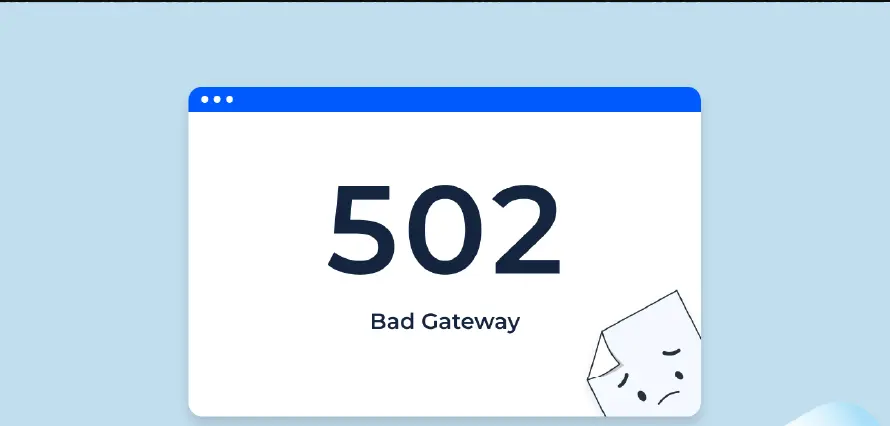
Your trusted VPS suddenly stops responding. Your WordPress site becomes slow, then throws repeated 502 errors. At first glance, it all seems to begin after installing the powerful combo of AI coding tools from JetBrains and GitHub Copilot Pro.
But the real story runs deeper.
As AI powered coding assistants become mainstream, developers and website owners increasingly rely on tools like JetBrains AI Assistant and GitHub Copilot to speed up programming. While these tools dramatically boost productivity, they can also expose hidden weaknesses in server environments, especially when running on resource limited VPS systems.
The Morning Your VPS “Died” — From AI Curiosity to 502 Errors
It starts like any normal day. You check your WordPress site, only to be greeted by a 502 Bad Gateway error. Logs reveal the server is struggling to respond. This scenario is common on low RAM VPS setups where PHP FPM cannot spawn enough processes to handle requests.
The root causes quickly become clear.
PHP FPM workers, responsible for processing requests, are constantly kept alive even when idle. Each worker consumes memory. Over time, RAM becomes fully exhausted. When new requests arrive, there is no memory left to create new processes, and the server responds with 502 errors.
According to hosting providers like DigitalOcean, 502 errors often stem from backend services such as PHP FPM failing to respond due to resource exhaustion.
When JetBrains AI and GitHub Copilot Meet a Low RAM VPS
JetBrains IDEs are among the most powerful development environments available today. Their AI features assist with refactoring, debugging, and code completion. GitHub Copilot, powered by advanced AI models, continuously analyzes and suggests code.
However, there is an important caveat.
If development tools, automated testing, or remote coding sessions are running directly on the same VPS hosting your WordPress site, background processes can increase server load. Even small spikes in concurrent requests can cause PHP FPM to spawn more workers than the VPS can safely handle.
The result is not a traffic surge but a memory bottleneck. RAM runs out, PHP FPM stalls, and the website crashes.
Understanding PHP FPM and Why It Eats RAM
PHP FPM, short for FastCGI Process Manager, is widely used to handle PHP execution on servers powering platforms like WordPress, Laravel, and Drupal.
It works by creating a pool of worker processes ready to handle PHP requests. The problem appears when these workers remain active regardless of traffic volume. On servers with limited memory, idle workers still occupy RAM that could otherwise be freed.
Official PHP documentation emphasizes that PHP FPM settings must be tuned according to available memory and traffic patterns to prevent resource starvation.
The Root Level Fix — Automatically Stopping Idle Workers
The solution is surprisingly straightforward once you understand the mechanism.
Instead of keeping PHP FPM workers permanently active, configure them to spawn only when needed and terminate automatically when idle. This approach can free up nearly 1GB of RAM on small VPS setups, dramatically improving stability.
This is exactly what the optimization script shown in the image accomplishes.
Step by Step Guide to Optimizing PHP FPM for Low RAM VPS
To fix the issue sustainably, you need to understand a few key PHP FPM parameters.
The process manager setting determines how worker processes behave. Common modes include static, dynamic, and ondemand. The ondemand mode is ideal for low memory environments because workers are only created when requests arrive.
Other important parameters include the maximum number of child processes, how many servers start initially, and how long idle processes remain alive before being terminated.
Switching to ondemand mode combined with an idle timeout ensures unused workers do not consume precious RAM.
Automation Script That Frees Memory Instantly
Below is the script that has proven effective in stabilizing WordPress VPS environments suffering from memory exhaustion.
#!/bin/bash

echo "Optimizing PHP FPM for ondemand mode to reduce RAM usage"

for file in /etc/php/8.* /etc/php/*/fpm/pool.d/*.conf; do
  if [[ -f "$file" ]]; then
    sed -i 's/pm = .*/pm = ondemand/' "$file"
    sed -i 's/pm.max_children = .*/pm.max_children = 5/' "$file"
    sed -i 's/pm.start_servers = .*/; pm.start_servers = 2/' "$file"
    sed -i 's/pm.min_spare_servers = .*/; pm.min_spare_servers = 1/' "$file"
    sed -i 's/pm.max_spare_servers = .*/; pm.max_spare_servers = 3/' "$file"
    sed -i 's/;pm.process_idle_timeout = .*/pm.process_idle_timeout = 10s/' "$file"
  fi
done

systemctl restart php*-fpm
echo "PHP FPM optimization completed"
This script switches PHP FPM into ondemand mode so workers spawn only when traffic arrives. It limits the maximum number of child processes and sets idle workers to shut down automatically. By applying changes to all PHP 8 versions using a wildcard path, it ensures no pool configuration is missed.
The result is immediate memory relief and a far more stable server.
Beyond RAM Fixes — Detecting and Removing Malware
Unexpectedly, the recovery process also revealed malicious code hidden inside the WordPress installation.
WordPress remains a primary target for attackers because of its massive global usage and the prevalence of outdated plugins or themes. Security firms such as Wordfence report a steady increase in malware injected through vulnerable extensions.
Once server performance was stabilized, scanning tools detected suspicious files and injected code fragments. Removing these threats not only improved security but also reduced background resource consumption caused by hidden scripts.
Practical Malware Scanning and Server Protection
If you suspect malware infection, open source security tools can help.
ClamAV, whose scanner is accessed via the clamscan command, is widely used for detecting malicious files. Rootkit Hunter, commonly known as rkhunter, checks for rootkits and hidden backdoors. Security plugins from providers like Sucuri add another protective layer at the application level.
Before scanning, always create a full backup. After cleanup, tighten file permissions, keep WordPress core and plugins updated, and schedule regular scans.
A clean server is not only safer but also lighter on system resources.
Lessons Learned From the Incident
This case highlights a critical reality. Modern AI tools do not directly break your server, but running development workloads on the same low resource VPS as a production website can expose severe bottlenecks.
Many VPS plans offer only one or two gigabytes of RAM, enough for a simple WordPress site under normal conditions. But if PHP FPM workers are misconfigured, or background services consume memory, the margin disappears quickly.
Proper tuning transforms the same hardware from unstable to reliable.
Server Stability Is the Foundation of Digital Success
AI powered coding tools from JetBrains and GitHub Copilot undeniably accelerate development. However, productivity gains must be balanced with solid server administration.
Knowing how to tune PHP FPM, monitor memory usage, and scan for malware makes the difference between a fragile setup and a resilient infrastructure.
A stable VPS keeps your website fast and trustworthy. A secure server protects your brand and visitors. And a skilled administrator understands how to balance tools, resources, and security.

Bài Viết Liên Quan
A Complete Guide to Choosing Hosting and VPS Solutions for WordPress and WooCommerce Websites
How to Reissue SSL Certificates for a Domain in CyberPanel Using Both the Control Panel and SSH
WordPress 7.0: The Biggest Transformation in Years as AI Officially Becomes Part of the Platform
Comparing Avada, Flatsome, Porto, WoodMart, and BeTheme with WooCommerce
What is the Woodmart Theme? The True Power of a “Heavy but Worth It” Design in Modern Web Development
Flatsome – Why It Has Become the Most Widely Used WooCommerce Theme
Bài Viết Cùng thể loại
WordPress Updated from 6.9.3 to 6.9.4 Within One Day: What Happened and Should You Be Concerned?
Check if your VPS has been hacked for unusual resource usage.
The Silent Shield for Servers in an Age of Cyber Attacks
WooCommerce and Major Security Warnings: Hard Lessons for the WordPress E-Commerce Ecosystem
“IMAP Auth process broken 993” Error
Guide to Installing ClamAV to Run Securely and Stably with ModSecurity and CSF on CyberPanel